Care Guide
Gecko Enclosure Setup
A step-by-step guide to building the perfect home for your crested gecko — from drainage layer to décor.
Choose Your Enclosure
Start with an enclosure sized for your gecko's weight. An 18 × 18 × 24 inch enclosure is ideal for adults and juveniles over 20 grams — it gives them plenty of vertical climbing space, which crested geckos love. A 12 × 12 × 24 is a good option if you're working with a smaller budget or a smaller gecko.
For geckos under 20 grams, a smaller enclosure or a well-ventilated plastic tub is actually better. Young geckos can struggle to locate their food in a large space, which can lead to stress and weight loss. Once they hit 20 grams, you can move them up to a full-size enclosure.
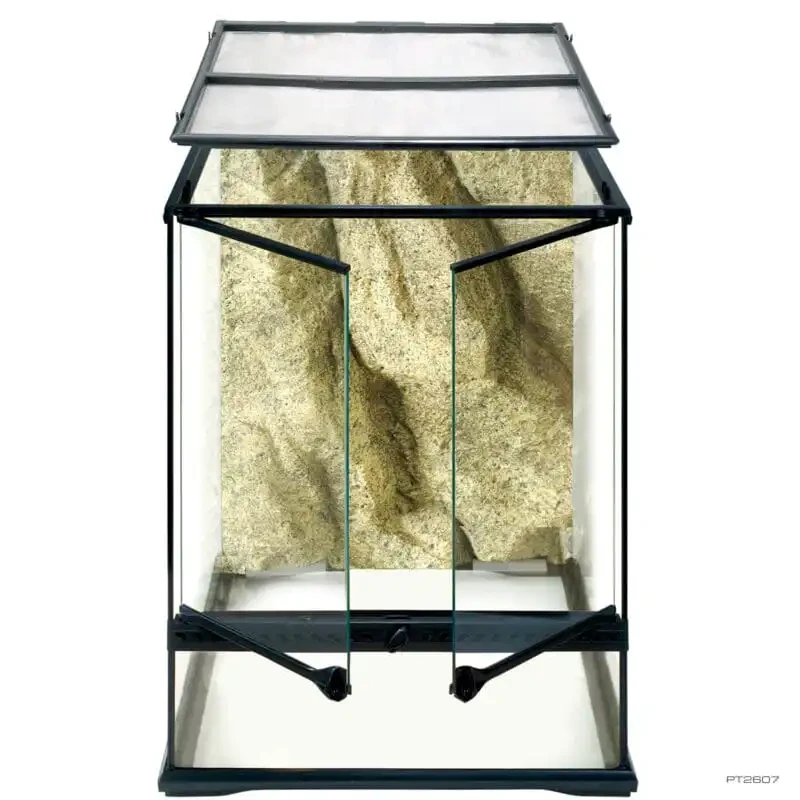
We prefer Exo Terra enclosures — they have front-opening doors that make maintenance easy without disturbing your gecko from above, and the raised bottom frame accommodates a drainage layer. The enclosure pictured is an Exo Terra 18 × 18 × 24.
Add a Drainage Layer
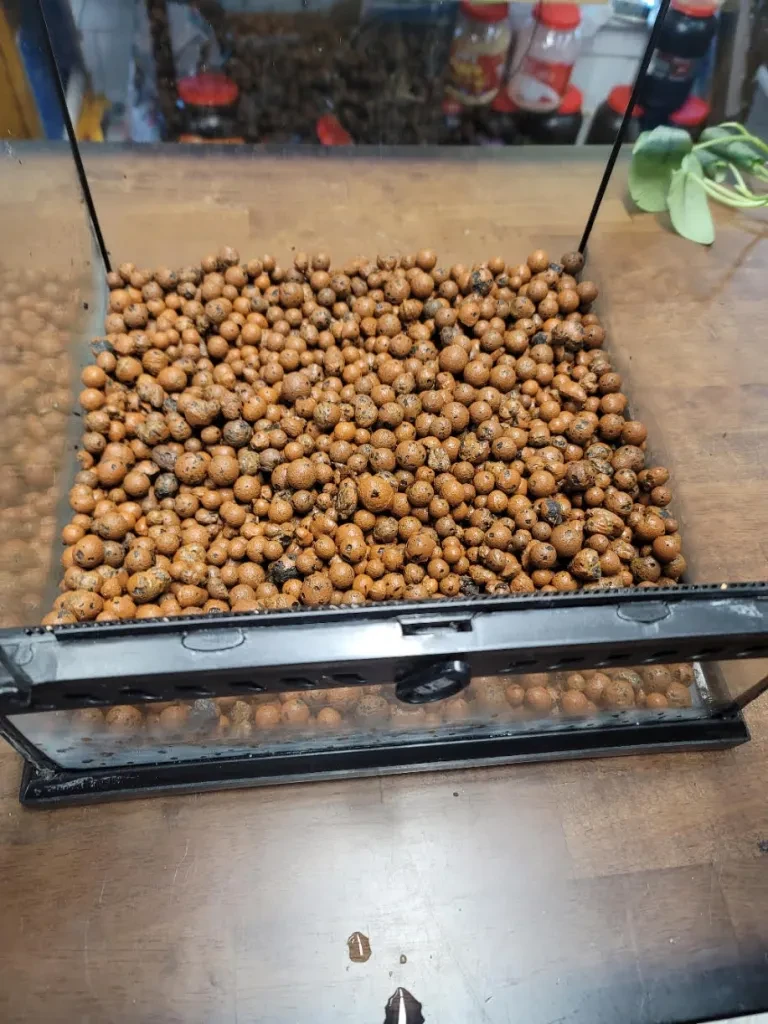
Pour a 1–2 inch layer of bio balls or drainage beads across the entire bottom of the enclosure. This layer acts as a reservoir — excess water from misting drains down through the substrate and collects here rather than pooling at the root level, which prevents rot and keeps the enclosure from becoming waterlogged.
Zoo Med's HydroBalls are a popular choice, but any inert, non-porous drainage media works. Avoid gravel or rocks — they hold moisture differently and can shift under the substrate. Bio balls are lightweight, easy to clean, and won't compact over time.
If you ever notice standing water in the drainage layer, you can use a turkey baster or aquarium siphon to remove it through the front door without disturbing the rest of the setup.
Add a Screen Separator
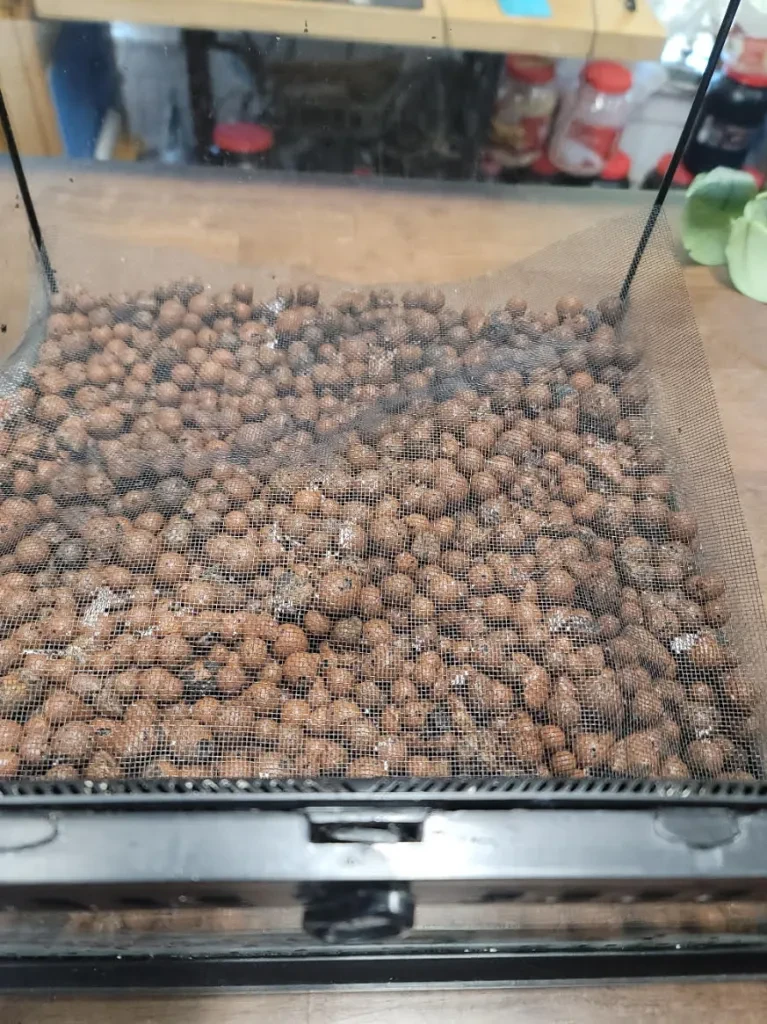
Lay a piece of aluminum or plastic insect screen directly on top of the bio balls, cut to fit the footprint of your enclosure. This barrier is critical — it keeps the substrate from sifting down into the drainage layer over time, which would eventually clog it and defeat the purpose.
Do not use metal window screen that isn't labeled rust-resistant. Rust will leach into your substrate and can harm your gecko and any isopods living in the enclosure. Aluminum or fiberglass screen from a hardware store works perfectly and is inexpensive.
Pangea sells a pre-cut screen separator sized for common Exo Terra enclosures, which saves the measuring and cutting step. If you're using a different brand or size, a roll of screen from a hardware store is easy to trim with scissors.
Choose Your Substrate
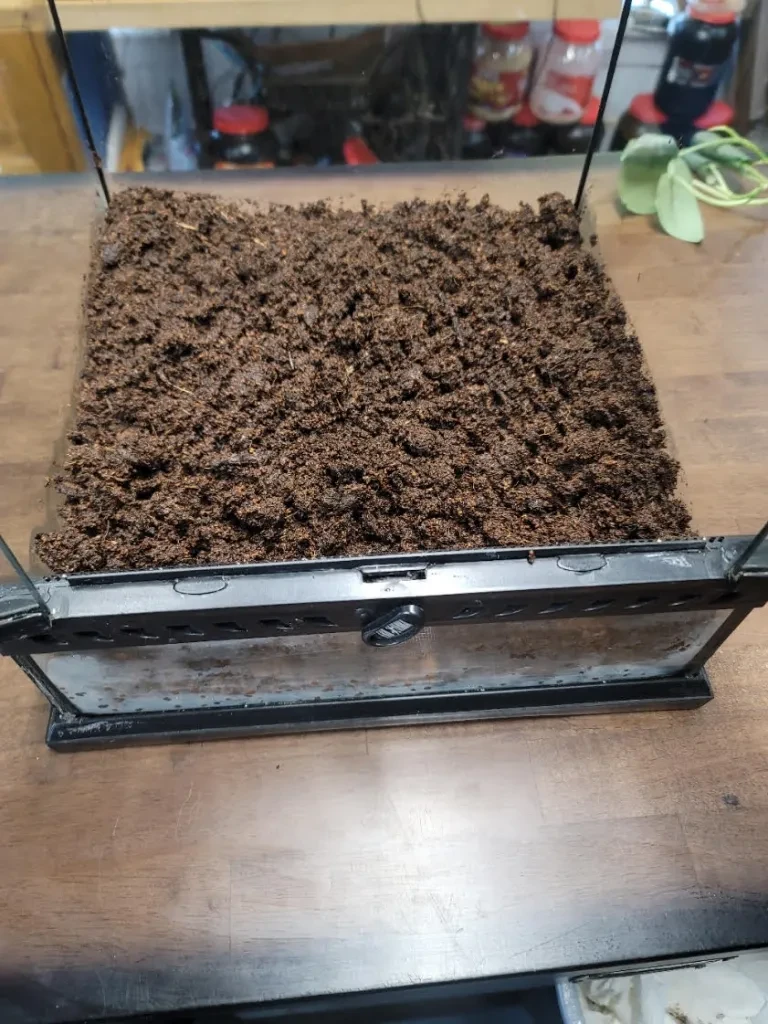
Add 3–4 inches of reptile-safe substrate on top of the screen. Coco fiber (coconut husk fiber) and jungle mix blends are excellent choices — they hold humidity well, support plant roots, and are safe if accidentally ingested in small amounts. Zoo Med's Eco Earth is our go-to.
Any dirt from a home center must be organic and must not contain fertilizers (Scotts or Miracle Grow brands can have fertilizer even in organic, read the entire bag to check). We freeze our dirt before using it to make sure no insects are present.
If you're sourcing substrate from a home improvement store, it must be 100% organic with absolutely no added fertilizers. Brands like Scotts and Miracle-Gro often add fertilizers even to their organic lines — read the entire bag, not just the front label. When in doubt, freeze the substrate for 72 hours before use to kill any hitchhiking insects or eggs.
Add Branches & Cork Bark
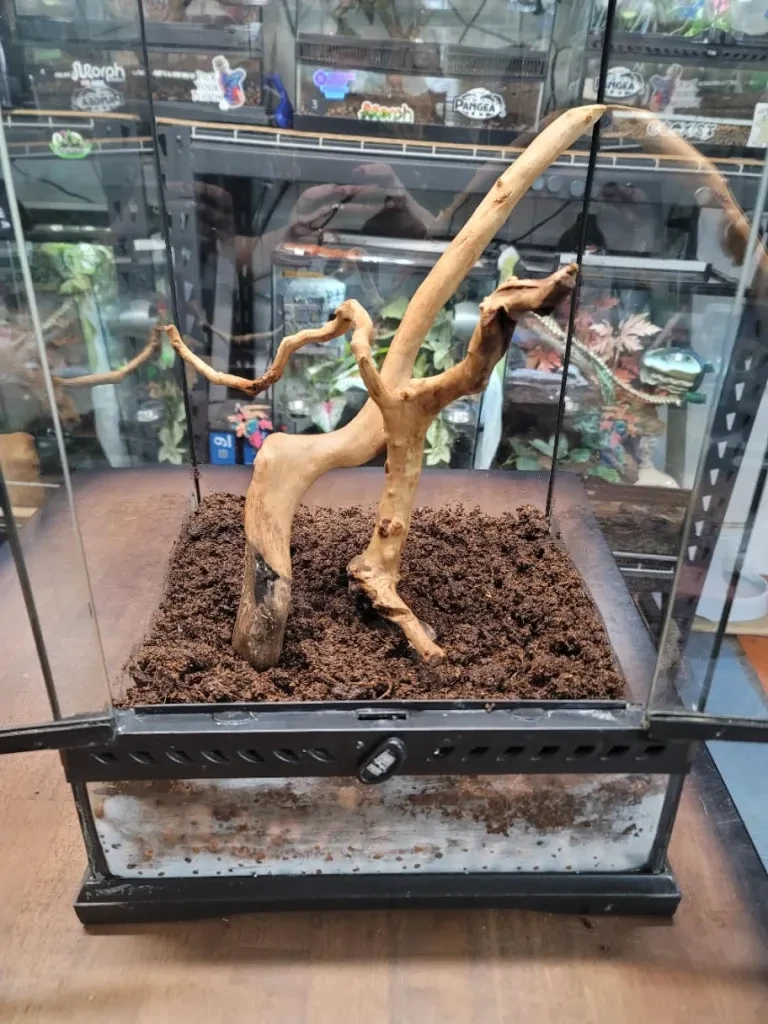
Crested geckos are arboreal — they spend most of their time off the ground, so vertical climbing structure is essential. Add branches, cork bark tubes, or cork flats at various heights throughout the enclosure. Spider wood is a favorite because of its dramatic branching shape and rough texture, which geckos love to grip and use to rub off shed skin.
Cork bark is especially useful because it's lightweight, holds humidity, and provides natural hiding spots. A flat piece of cork leaned against the glass gives your gecko a surface to cling to and a sheltered spot to rest behind.
If you collect branches from outside, research the wood type first — some species like cedar, pine, and eucalyptus can be toxic to reptiles. Safe options include oak, maple, and fruit woods. Any outside wood should be baked at 250°F for 1–2 hours or frozen for 72 hours before going into the enclosure to eliminate parasites, mites, and bacteria.
Add a Feeding Ledge
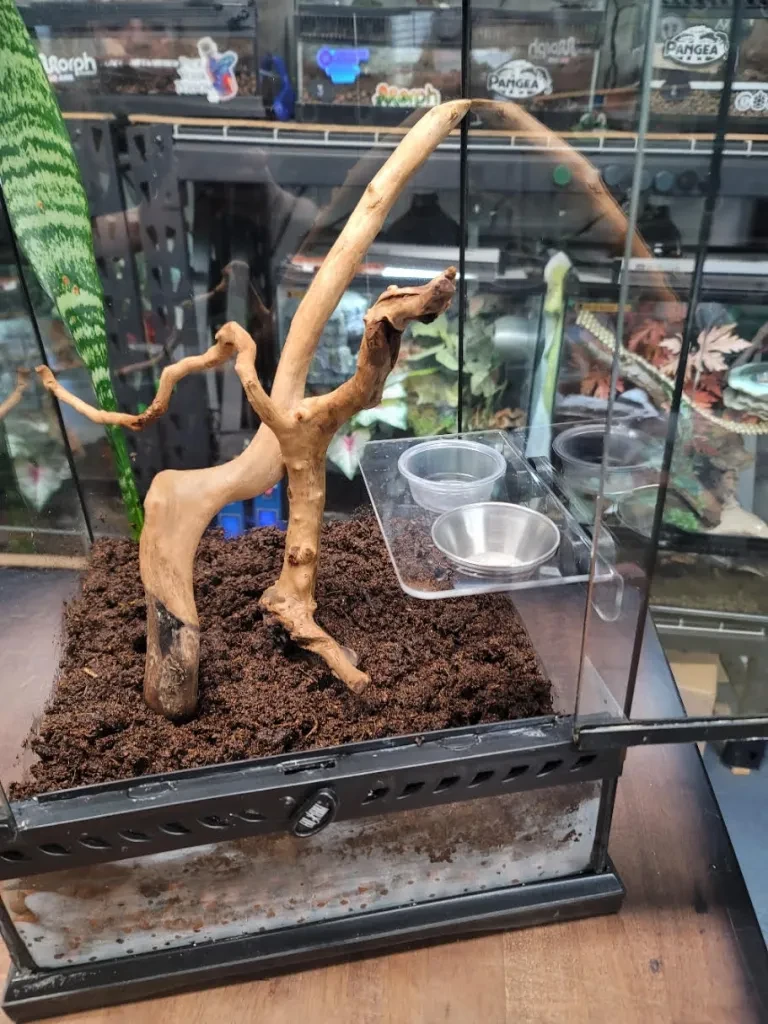
Crested geckos are arboreal feeders — in the wild they forage up in the tree canopy, not on the ground. Always place food up high in the enclosure, ideally at mid-height or above. A gecko that has to eat off the ground is stressed and more likely to go off food.
We recommend magnetic feeding ledges with two cups — one for Pangea or Repashy crested gecko diet (CGD) and one for fresh water. Magnetic ledges are far more reliable than suction cup versions, which will eventually fail and drop the ledge — potentially injuring your gecko or making a mess.
Replace the CGD every 24–48 hours to prevent mold and bacterial growth, especially in a humid enclosure. Rinse the cups thoroughly each time. Fresh water should be changed daily.
Add a Ground Water Dish
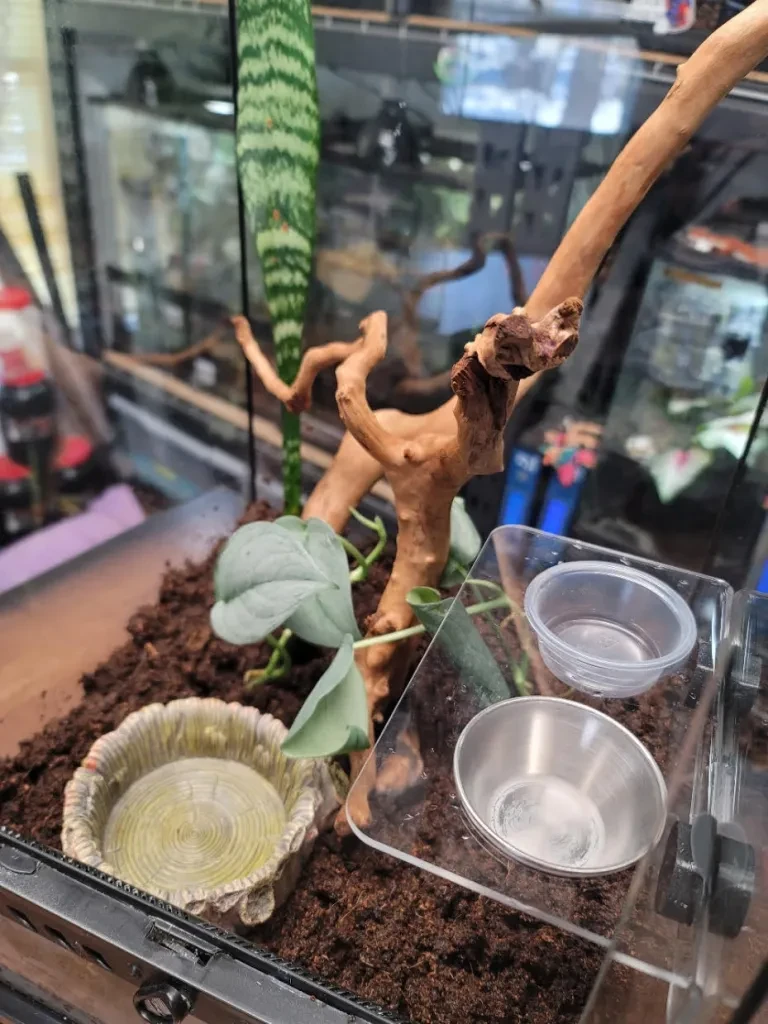
In addition to the water cup on the feeding ledge, place a shallow water dish on the ground. Keep it shallow enough that a small gecko can't drown — no deeper than the gecko's chin when standing. A wide, flat dish works better than a deep bowl.
The ground dish serves several purposes: geckos will soak in it before and during a shed to help loosen their skin, drink from it when they prefer ground-level water, and it contributes to the overall humidity of the enclosure. Change the water daily and scrub the dish weekly to prevent bacterial buildup.
Use dechlorinated or filtered water. Tap water is generally fine if you let it sit out for 24 hours or use a reptile water conditioner — chlorine can irritate their skin and eyes over time.
Provide a Hide
Every gecko needs a dedicated hide — a dark, enclosed space where they feel completely secure. Without one, your gecko will be chronically stressed, which suppresses their immune system and appetite. A good hide should be just large enough for the gecko to fit inside snugly; too large and it won't feel secure.
We love the handcrafted caves from Firehouse Geckos — they're beautiful, gecko-safe, and sized perfectly. Coconut huts and rock caves from pet stores also work well. Place the hide at a mid-to-upper level of the enclosure, not on the ground, since crested geckos prefer to sleep up high.
Avoid any hide that attaches with suction cups. Suction cups lose their grip over time — especially in a humid enclosure — and a falling hide can seriously injure or kill a gecko. Stick to hides that rest on branches, wedge between cork bark, or sit on a ledge.
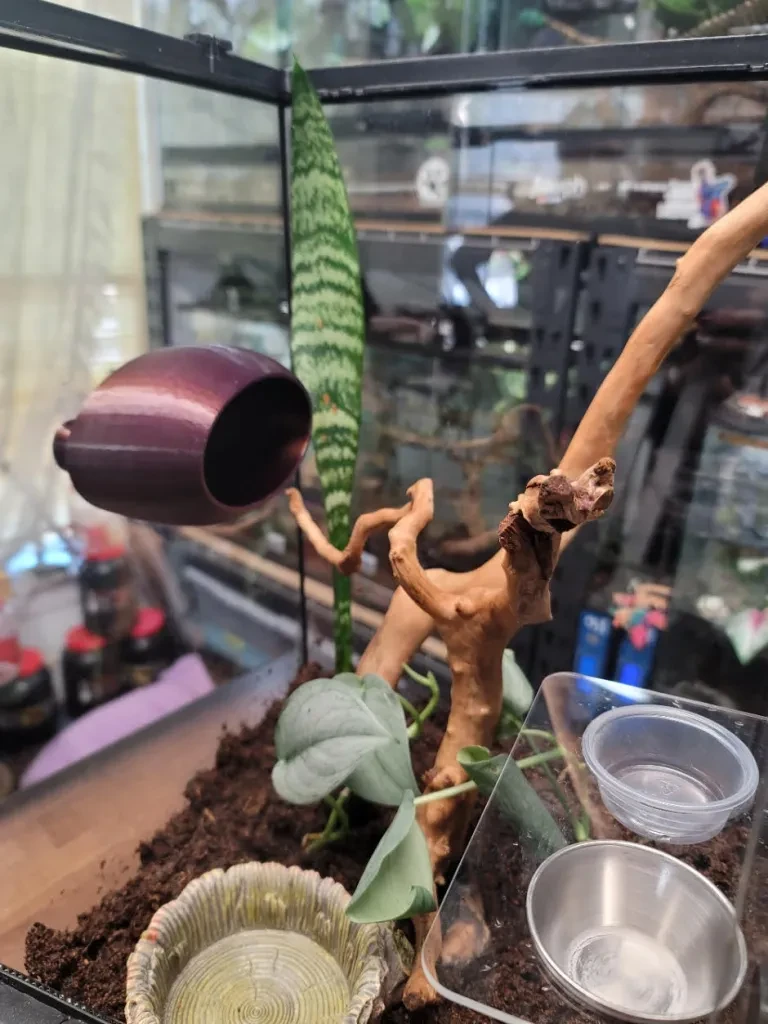
Finish with Plants
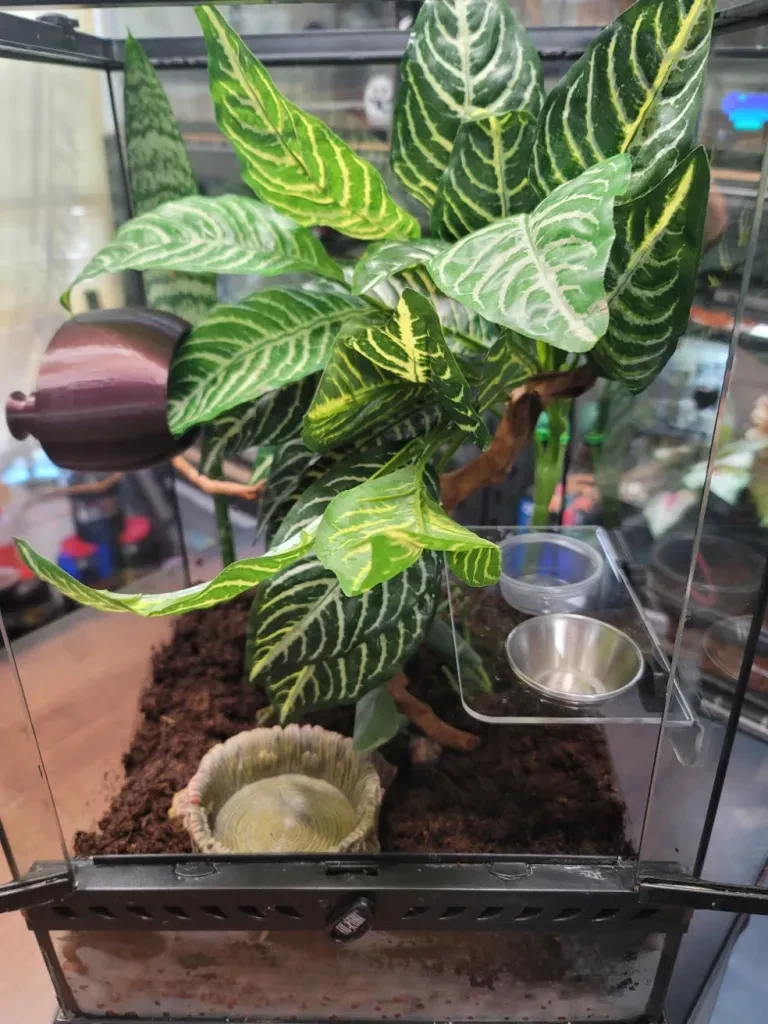
Plants are the finishing touch that transforms a functional enclosure into a thriving bioactive habitat. Use a mix of live and artificial plants. Live plants — pothos, bromeliads, and ficus are all excellent choices — help regulate humidity, provide cover, and support the isopod cleanup crew by giving them leaf litter and organic matter to break down.
Large artificial plants are great for filling in gaps and giving your gecko broad leaves to lounge on. Crested geckos love to drape themselves across wide leaves, especially near the top of the enclosure. Make sure any artificial plants are made from non-toxic materials and have no sharp wire ends exposed.
Before adding any live plant, research whether it's safe for reptiles. Pothos (Epipremnum aureum) is a top pick — it's nearly indestructible, grows in low light, and is non-toxic to geckos. Avoid plants treated with pesticides; rinse and quarantine new plants for a week before adding them to the enclosure.
Add a UVB Light
Finish your setup with the Arcadia ProT5 ShadeDweller Pro Arboreal mounted on top of the enclosure. Crested geckos are crepuscular and live in the shaded forest understory, so they need a low-output UVB specifically designed for shade-dwelling species — not the high-intensity bulbs made for desert reptiles.
The ShadeDweller Pro Arboreal is purpose-built for arboreal setups: it produces a UVI of 0.5–1.5 at basking distance, which falls squarely in the Ferguson Zone 1–2 range that crested geckos occupy in the wild. UVB allows your gecko to synthesize Vitamin D3 naturally, which supports calcium metabolism, immune function, and long-term bone health.
Mount the fixture on top of the mesh lid, centered over the enclosure. Run it on a 10–12 hour on/off cycle using a timer to simulate a natural photoperiod. Replace the bulb every 12 months — UVB output degrades well before the bulb visibly dims, so an old bulb that still looks bright may no longer be producing effective UVB. It's available at Chewy and Pangea.
Add a Ceramic Heat Emitter & Thermostat
Crested geckos thrive at temperatures between 72°F and 78°F and must never exceed 85°F — heat stress above that threshold can be fatal within hours. Most homes stay within this range naturally, but if your room drops below 68°F at night or in winter, a ceramic heat emitter (CHE) is the safest way to add warmth without disrupting your gecko's day/night cycle.
A CHE produces heat without any light, making it ideal for nocturnal and crepuscular species like crested geckos. Unlike red or blue night bulbs — which do emit light and can disrupt sleep — a CHE is completely dark. Mount it in a ceramic or porcelain dome fixture rated for the wattage you're using; never use a plastic fixture, as CHEs run extremely hot and will melt it. A 60–100 watt CHE is sufficient for most standard enclosures.
A thermostat is not optional — it is essential. Without one, a CHE will run continuously and can overheat the enclosure to lethal temperatures. Use a proportional or on/off thermostat with a probe placed at mid-height inside the enclosure, away from the CHE directly. Set the target temperature to 75°F. The thermostat will cycle the CHE on and off automatically to hold that temperature, protecting your gecko around the clock.
Pro Tip
Pro Tip: Add Isopods!
Isopods make excellent tank janitors — they break down waste, aerate the substrate, and help maintain a healthy bioactive enclosure. Check out our full isopod catalog to find the perfect cleanup crew for your gecko's home.
Browse IsopodsReady to Build Your Gecko's Dream Home?
Check out our endorsed brands for enclosures, substrate, feeding ledges, and more — everything we personally use and recommend.